

Recent Recordings by Area Artists
Producer Zev Feldman continues his releases of archival treasures timed for the annual Record Day, and this year he is spoiling us with a new source: recordings made in the seventies at Joe Segal’s Jazz Showcase in Chicago, two of which will be of particular interest to SEMJA readers, by Yusef Lateef and Joe Henderson. At the same time, Verve has delighted us by issuing a long recital by the Oscar Peterson Trio from 1961 performed at Detroit’s Baker’s Keyboard Lounge.
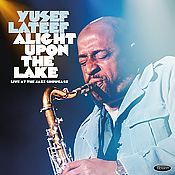
The first is Yusef Lateef, Alight Upon the Lake: Live at the Jazz Showcase with pianist Kenny Barron, bassist Bob Cunningham, and drummer Albert “Tootie” Heath, June of 1975, on three LPs or two CDs, from the penultimate night of a two-week engagement at the club. The recently released concert recordings with the same musicians from Sweden two years earlier include a few of the same tunes, and comparison of these evidences just how creative the quartet was in performance (Atlantis Lullaby, reviewed in the April issue of the Update). A good example is “Eboness,” a flute feature written by Lateef’s old Motown friend Roy Brooks. Lateef first recorded it in 1969 with the composer at the drums and Detroiter Hugh Lawson on piano, in a pensive version that laid focus on the minor key, and while it joined his performance repertoire, was never released on any recordings until recently. The Swedish version begins with a piano bugaloo intro, followed by a funky flute solo that includes vocal effects, a raucous piano outing, and then a bass solo. The Showcase performance starts with much more subtle stylings harkening back to the original version, slightly slower, with a spectacular expressive statement by Lateef, who was in a much more subtle mood, as was Barron on what follows.
Some of the other tunes were rarely performed by the group, including “Opus 1 & 2,” and a ballad “I Remember Webster,” on which the leader pays homage to Ben Webster, just slightly altering his sound, with a touch of vibrato in a tip of the hat to the great tenor man. There seems to be no record of any other performance of the composition.
The evening ends as usual with the blues, the “going home number” as Lateef describes it, with a particular boisterous twenty-four-minute version of “Yusef’s Mood” that has Barron unusually down home, playing boogie and citing tunes in a manner that would confound anyone on a blindfold test. The band takes it down and Lateef, seemingly again in a Websterish subtone mood, plays around with “When the Saints Go Marching In,” slowly building it all up while Barron gets old-fashioned again, finally ending it all with a screeching climax. As the audience screams for more, Lateef diddles with “Going Home,” and we then hear Joe Segal announcing a slew of wonderful performers to come and that was it for a rainy night. The album contains some interesting commentaries and reminiscences, including a fascinating one by Herb Boyd.
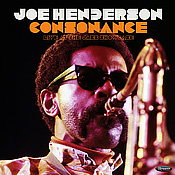
The second album reviewed here is by tenor saxophonist Joe Henderson, Consonance: Live at the Jazz Showcase, a 3-LP or 2-CD release, recorded during a five-day engagement February 15–19, 1978, with Joanne Brackeen, piano, Steve Rodby, bass, and Danny Spencer, drums. Born and raised in Ohio, Henderson moved to Detroit in 1957 to study music at Wayne State University and also developed his saxophone technique under maestro Larry Teal at the Teal School of Music. His college roommates were Curtis Fuller and Yusef Lateef and he quickly became part of the Motor City jazz scene, becoming fluent in the bop language of the time, but also becoming interested in the newer stylings of John Coltrane and Ornette Coleman. He was drafted in 1960, thus ending his sojourn there for good but he remained musically a Detroiter, keeping in touch with its artistic diaspora. By the time these recordings were made Henderson was a well-established jazz artist, internationally recognized as one of its top tenor saxophonists and for his compositional skills. He had moved to the West Coast where he taught privately and at the San Francisco Conservatory of Music and yet often hit the road for performances elsewhere. The quartet that played at the Jazz Showcase was one that he used frequently at the time, using local bassists. Brackeen had been a regular member of his quartet from 1972 to 1975 and regularly returned to work with him in subsequent years and was thus very well acquainted with Henderson’s musical style and repertoire. Steve Rodby was a versatile bassist who worked accompanying visiting artists at the Showcase, so he obviously had no trouble adapting to the band’s concept. The catalyst here is drummer Danny Spencer, whose presence is of prime interest to many readers of the Update.
Spencer was born in the small Upper Peninsula town of Ishpeming in Marquette County, eventually moved south, first to Lansing from where he became a member of the Detroit jazz community. He quickly became one of the elite first call drummers, taking part in some of the most adventuresome groups of the day, including the Contemporary Jazz Quintet, which recorded for Blue Note and the local Strata label. The tenor saxophonist with the group was Leon Henderson, Joe’s younger brother. Spencer was always a hard-driving percussionist, who ornamented his beats, shifting them, playing various meters at the same time. He was an attentive listener who complemented what was happening around him without trying to overshadow his cohorts. Inspired early on by Elvin Jones, he built his own style on the latter’s polyrhythmic stylings. Henderson was quite taken with his playing and used him frequently on the road. Before the Showcase gig, the group is documented playing at New York’s Village Vanguard the previous October. After the Chicago appearance they remained together off and on for the rest of the year, returning to the Vanguard twice and touring Germany and the Netherlands, apparently playing much the same repertoire; but the present recording is the only available document of this Henderson quartet.
The musical abundance on offer here is almost overwhelming: nine tunes in almost three hours of listening. The energy of the group amazes from the first notes, beginning with a fast, 24-minute version of John Coltrane’s “Mr P.C.” Henderson regularly played this tune in performance, and it readily invites a comparison with the older saxophonist, underscored by Brackeen’s avowed admiration of McCoy Tyner and Spencer’s affinity with Elvin Jones. By this time Henderson had moved on from his bop influences and was absorbing new trends in the music, including but not limited to Coltrane. His stunning long solo here is a statement of both admiration and independence from the latter, one that never lets up, full of ideas that are developed, shaken out and abandoned for something stunningly new, all played with a technical mastery few could rival. There is a ‘Trane edge to his sound, but it is warmer and has its own unique resonance. Reviewing a Vanguard appearance of this quartet two months later (with a different bassist) Chuck Berg in down beat noted that the saxophonist’s playing “oscillated between poles first staked out by Sonny Rollins and John Coltrane. Incorporating both influences as adjuncts to his own unique style, Henderson danced with melodic and modal abandon.”
No precise information is provided on the date of the recording, but if this documents one day during the engagement, one assumes that it comprised three sets. As such, the continuity of the energy is striking as the tempos are almost all fast, and even standards such as “Invitation” or “Softly in a Morning Sunrise” are explored up-tempo. The one exception was “’Round Midnight,” which began with long virtuosic inventive a capella tenor excursion, in which one can almost sense a rebellion against slowing down for a ballad, and indeed, once Brackeen and the others come in, he only hints at the melody, and after exploring the outer reaches of the harmony, he picks up the pace, avoiding any maudlin thoughts, continuously shifting rhythmic and melodic ideas, sometimes utilizing extended techniques, cries, blues effects, in an uncompromisingly non-ballad ten-minute ride. Brackeen follows in a similar upper-tempo manner, eventually focusing on the melody, slowing it down into her own a capella out-of-tempo statement, by contrast asserting a taste of romantic expression. Henderson joins her to state the bridge of Monk’s tune and then just states a few notes of the main theme, only hinting at Brackeen’s balladic assertion. Without hesitation they move onto “Good Morning Heartache,” which is played somewhat more conventionally, but then also moves on to a loping middle-tempo set of improvisations.
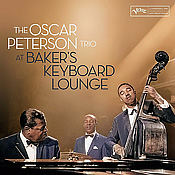
The third album of concern to us is Oscar Peterson: At Baker’s Keyboard Lounge: The Complete Recordings. In August of 1961, the Oscar Peterson Trio settled in for a two-week engagement at Baker’s Keyboard Lounge. After years of playing in a Nat King Cole inspired piano/bass/guitar trio, Peterson had decided to hire a drummer to replace departing guitarist Herb Ellis. The group toured tirelessly and worked hard as the house rhythm section of the Jazz at the Philharmonic concerts and related recordings, sometimes with the addition of drummers such as Buddy Rich. In 1959 the pianist and his longtime master bassist Ray Brown were joined by a younger drummer, Ed Thigpen, who had been working with Billy Taylor’s trio. This was a perfect choice, as Thigpen’s subtle but forceful drive and unique brushes mastery provided a much better fit than the more bombastic percussionists that Peterson at times had to deal with at Jazz at the Philharmonic concerts. Thigpen, who stayed with him for six years and eventually settled in Copenhagen, was one of the finest drummers in jazz, whose legacy has been overlooked on this side of the Atlantic but who was fully appreciated in Europe, where he played and taught for decades.
The sheer abundance of twenty-seven tracks of music and announcements can be overwhelming. Some will make an attentive evening of it, for others it will recede into the background; one can also choose to listen selectively, savoring it in small bits. Even though Peterson was performing on the road and in studio on an almost daily schedule, the wide-ranging repertoire was ever evolving, with arrangements changing, settling in only to shift with new elements.
The first tracks of the evening display the uniqueness of each Peterson Trio set. The album opens with “Autumn Leaves,” in an arrangement that begins by quoting “All Blues,” the Miles Davis modal blues that had already become a standard by then but was never part of Peterson’s repertoire. Indeed, while Peterson often used blues inflections, he rarely featured such tunes, using them mostly as set closers. The intro was not yet there when “Leaves” was caught in performance six months earlier in Canada. After being documented in the Detroit recording a year later in Chicago’s London House, it remained in use until the very end of the existence of this trio in 1965.
Next follows the earliest recording of Peterson playing “Django,” composed by John Lewis for the Modern Jazz Quartet, and then the bebop standard “Confirmation.” In his highly informative liner notes, Mark Stryker observes that the pianist’s work here and on “Scrapple from the Apple” “do not come off, partly because Peterson overplays but also because they open a window on the limits of his rhythmic language,” and it is difficult to disagree with his judgment.
The fourth item was “Whisper Not,” and this is where comparison with the justly celebrated London House recordings is revealing. The arrangement is identical, but the performance and conceptual realization are not. The Baker’s version is more temperamental, with more blues inflections, and perhaps more involvement, while the sound, to these ears, is much more direct, with the brush work captured better. The recording was undoubtedly first class, but the remastering undoubtedly contributes much to the capture of the immediacy of the club atmosphere. Our readers will undoubtedly be drawn to this album because of the recording venue, but local pride aside, this is a unique document of wonderful music making by a remarkable trio.